By Asif Rashid
The movement for popular rights that has been unfolding in Pakistani-administered Jammu and Kashmir over the past several years has not only had a profound impact on the political landscape of the region but has also raised fundamental questions about the traditional official and unofficial narratives surrounding the Kashmir issue. Emerging around issues such as flour, electricity, taxation, employment, education, healthcare, the privileges enjoyed by the ruling elite, and state expenditure, the movement is no longer confined to economic demands. It is increasingly challenging the prevailing political and state order.
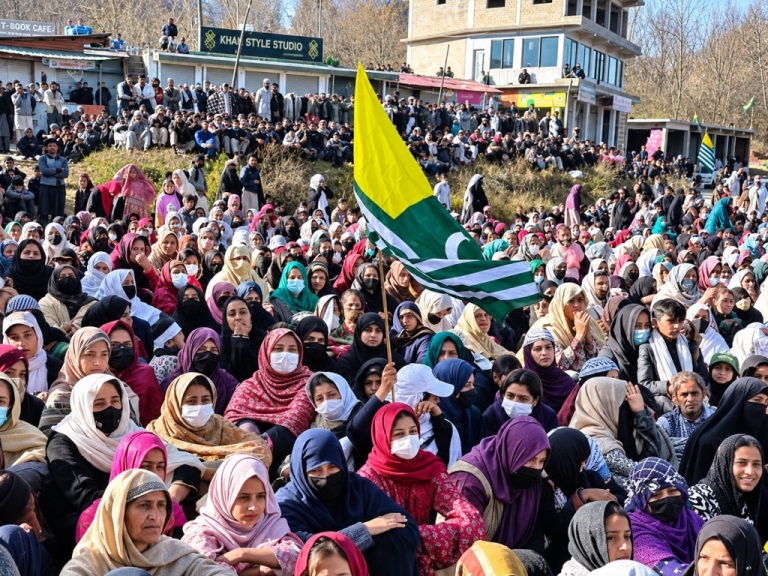
One of the most significant features of this entire process is that it has transformed ordinary people into active participants in political life. Workers, students, unemployed youth, women, traders, and other social strata are bringing their everyday problems into public debate and highlighting them. This is precisely why the movement cannot be regarded as merely a temporary protest.
However, the current situation in Jammu Kashmir, particularly in Rawalakot (Poonch), has entered a phase in which the confrontation between the state and the movement is no longer merely a political disagreement or a dispute over demands. Rather, it has evolved into a broader political, social, and state crisis.
The events of the past six months have made it clear that the state’s strategy of crushing the movement through force, intimidation, arrests, threats, and pressure on its leadership has not been particularly successful, although the movement has, for the time being, been confined to a limited area. Despite approximately 130 violent deaths, the movement has, at the very least, not been crushed.
This failure also appears to have left the ruling establishment frustrated. Nevertheless, it remains adamant about continuing its policy of repression. Despite indications of internal divisions within the state apparatus over this issue, a dominant section of the state continues to adopt an aggressive stance. This course of action has also exposed the true character of the bourgeois state to a large section of the population.
However, despite persistent state repression and the enormous human and material losses, people remain unwilling to retreat. At the same time, questions and concerns surrounding the movement’s internal problems, the absence of an adequate strategy, and the prospects for a political solution to the crisis are becoming increasingly pronounced.
Yet, once again, the entire situation reflects a fundamental reality: behind the immediate demands lies a leap in the political consciousness of the masses, alongside a deeply rooted collective sense of deprivation. These sentiments may be temporarily suppressed, but they cannot be eliminated.
Therefore, temporarily dispersing a movement and eliminating its underlying causes are two entirely different things. Moreover, any attempt to crush the ongoing protests and sit-ins through a major or decisive military operation could have extremely serious consequences and may further aggravate the situation. It could even fuel a further escalation of the movement. The situation could potentially descend into wider turmoil and civil war.
Such operations may temporarily clear the streets and public squares, but they cannot erase the anger, deprivation, and spirit of resistance deeply embedded in the hearts and minds of the people. This could give rise to a prolonged state of instability and rebellion. Even the more serious-minded policymakers within the state are perhaps aware of these dangers.
Furthermore, the pattern of state repression pursued over the past several months has inflicted serious political and moral damage on the historical position of the Pakistani state on the Kashmir issue. This is one of the reasons why, at least so far, the state has been reluctant to launch a decisive or even more bloody crackdown.
The Kashmir issue has historically occupied a central place in the Pakistani state’s national narrative. The dispute has played a pivotal role in shaping Pakistan’s domestic politics, foreign policy, defence strategy, and military establishment. However, developments over the past several months in the Pakistani-administered territory of Jammu Kashmir have exposed deep contradictions between the state’s rhetoric and its actions.
In this context, the sense of frustration and deprivation on this side of the Line of Control (LoC) may be raising even more profound questions than those emerging in Indian-administered Jammu Kashmir. The historical backgrounds and prevailing conditions on the two sides of the Line of Control cannot be considered entirely identical. Nevertheless, the role played by imperialist states around the world is not all that different from one another. Although this role often remains concealed behind the deceptions of bourgeois politics, democracy, and diplomacy, it becomes fully exposed only under particular circumstances and in specific situations.
The state continues to insist that the leadership of the movement must surrender before any negotiations can take place. The fundamental purpose of negotiations is to understand the differences between the parties, rebuild mutual trust, and arrive at an acceptable middle ground. However, when one party is asked to surrender even before the negotiating process begins, the prospects for any positive outcome become considerably slim.
On the other hand, the state’s dilemma is that, given the extent to which the situation has deteriorated, it does not want to enter into negotiations in a manner that would place the movement on an equal footing with itself. Such an impression would undermine its own authority, its aura of power, and the climate of fear it seeks to maintain.
For the leadership of the movement, too, the implications of surrendering by calling off sit-ins and protests merely to enter into negotiations are not particularly difficult to understand. Thus, the situation has reached a stalemate.
The conference organised by the Jammu Kashmir Peoples Party in Islamabad on 23 November, and the proposals put forward there (particularly those presented by former President Sardar Masood Khan), could have represented a positive step forward in this regard. The conference proposed a relatively sensible way forward through negotiations, confidence-building measures, and progress towards a peaceful political settlement of the issue. Such an approach could have paved the way for resolving the crisis.
(Although the conference was also attended by individuals with a jihadi background and questionable credentials, whose ambiguous statements have given rise to fresh suspicions and confusion.)
Nevertheless, the very next day, Pakistan’s Minister of State for Interior, Talal Chaudhry, adopted an extremely hardline position at a press conference, declaring that there would be no negotiations whatsoever with armed individuals or the banned Awami Action Committee, and that the state would enforce its writ through the use of force whenever necessary.
Subsequently, the Muzaffarabad Assembly also passed a resolution along similar lines, stating that negotiations with the Action Committee would take place only on the state’s terms.
Two days after these developments, video statements by another dubious jihadi group, widely perceived to be state-sponsored, have begun circulating on social media. The group has declared that it would consider any operation against the movement an attack on Kashmir and would respond to it with full force.
This is an extremely dangerous development, as it effectively provides the state with further justification for intensifying its repression against the movement. Drawing on their past experiences, the overwhelming majority of ordinary people in Jammu Kashmir express their aversion to and disassociation from such groups. During the recent period, groups of this nature have also been seen engaging in limited activities under the cover of the popular movement. This has done the movement no good.
However, the people now need to be particularly vigilant on this issue. The leadership, in particular, must adopt an unequivocal position on the matter, not merely in words but through concrete actions as well.
However, while the aforementioned developments highlight the divisions within the state over how to handle this crisis, they also reveal a degree of indecision and confusion within the leadership of the movement itself. This periodically manifests itself in the form of conflicting or contradictory statements.
In fact, even the greatest revolutionary movements in history have had their internal contradictions, disagreements, and weaknesses. Infiltrators, saboteurs, state agents, and lumpen elements of all kinds also attempt to carry out their own agendas within such movements. Nevertheless, it is essential to address these problems as quickly as possible. Otherwise, the coming generations may be left to bear the consequences of irreparable damage.
This is precisely why coherence in a movement’s political formation, organisational structure, ideological foundations, and programme is of immense importance. So too is the development of a strategy and slogans that correspond to the prevailing circumstances and conditions, allowing for all possible tactical flexibility, including strategic retreats, compromises, and manoeuvres of various kinds.
Otherwise, states, which are generally far more organised and centrally coordinated than popular movements, can easily and swiftly manoeuvre to surround protesting masses, push them towards adventurism, exhaust them, disperse them through various means, or ultimately crush them.
The crisis confronting the movement in Jammu Kashmir needs to be examined from this perspective as well. Condemning and resisting state repression and the use of force is essential. However, the movement’s leadership cannot be absolved of its responsibility to critically examine its own political and organisational weaknesses. Considerable delays have already occurred in this regard, and the movement has already suffered substantial losses as a consequence.
As in any war, the balance of forces often assumes decisive importance in uprisings by the oppressed. In light of an assessment and calculation of this balance, it is also essential for the leadership of a movement to keep the avenues of dialogue, negotiations, and other political options open. This requires overcoming all forms of ego and emotionalism, and even resisting pressures emanating from within the movement itself.
People who rise up in revolt are prepared to fight and die. But making every possible effort to minimise the loss of human life and material resources must also be a fundamental component of any revolutionary or resistance strategy.
Unfortunately, on several occasions during the current movement, the leadership has adopted an inflexible and “apolitical” strategy that has narrowed the possibilities for negotiations and brought unarmed people into direct confrontation with state power. Announcing conditions even before negotiations begin, when the other party is not prepared to accept them under any circumstances, cannot be considered a political strategy. Such an approach is only justifiable when the balance of forces is clearly and decisively in your favour.
In the absence of such a balance, efforts to pursue intermediate solutions and gradual progress must continue, while keeping longer-term objectives (if there are any!) in view. This is because the consequences of an inflexible, hasty, or otherwise flawed strategy are not confined to the leadership alone. The entire population, including children, women, and the elderly, is made to pay the price.
Therefore, just as the state’s practice of collective punishment is inhumane and unacceptable, the movement’s leadership must also remain accountable to the people and make every possible effort to ensure that they are not dragged into a futile and unequal confrontation.
Political courage does not simply mean adopting a hardline position. It also means having the capacity to assess circumstances correctly, adjust one’s strategy, rectify mistakes, and create room for tactical compromise in the interests of the people.
In this context, the strategy behind the so-called Kafan Posh March (Shroud-Wearing March) also calls for reconsideration.
Another fundamental cause of the current crisis is the absence of an alternative leadership. During the initial phase, revolutionary, progressive, or at least politically experienced nationalist organisations and figures played an important role in organising the movement. However, the Core Committee (the leadership of the Joint Awami Action Committee) was not the product of a prolonged or mature political and organisational process. Rather, it emerged within a relatively short period as a consequence of specific circumstances, popular discontent, and the particular class structure of the region (with the industrial proletariat virtually nonexistent in the region).
On the other hand, the political forces that could have provided an alternative leadership failed to recognise the potential of the movement and the latent power of the masses. In this regard, they were reluctant to step forward in time to assume leadership or, at the very least, to become a significant part of it.
When key demands, such as subsidised flour and electricity, were conceded as a result of mass mobilisation, the entire credit for this success went to the Core Committee. Subsequently, this leadership began to assume a rather conventional role, gradually pushing revolutionary tendencies and other relatively mature political activists out of the decision-making process.
Criticism of the movement’s strategy was portrayed as hostility towards the movement itself. In this regard, a culture of abuse and accusations was actively cultivated and encouraged on social media. Meanwhile, the aforementioned political forces, despite their reservations about the conduct and methods of the Core Committee, also failed to come forward with any coherent political programme or strategy of their own.
As a result, a historic opportunity was squandered: to build a new revolutionary political force (or, at the very least, a radical resistance formation) in Jammu Kashmir, rooted in a broad popular base and capable of taking the current struggle forward, both within the region and beyond its borders.
Rather than patiently organising the masses and relying on their collective strength, the Core Committee made assurances from state officials and “guarantors” the cornerstone of its strategy. The consequence of subordinating popular power to institutional guarantees was that the movement fell into a trap, gradually became confined to narrower limits, and eventually reached a dead end, where the avenues for confronting state repression and coercion increasingly disappeared.
The fundamental lesson of this entire experience is that popular movements cannot advance through protests and temporary victories alone. They require a long-term perspective (including an understanding of the limits of their own forces), ideological clarity, a solid democratic-centralist organisation, collective leadership, and a continuous adaptation of methods to changing circumstances and developments.
Otherwise, even the greatest sacrifices made by ordinary people end up being confined to a handful of temporary gains—gains that those in power can subsequently take back without much difficulty.
The question of violence and the use of firearms in the current movement cannot be examined in isolation from its broader context. The state’s ruthless use of force brought the situation to such a level of confrontation that it generated tendencies towards retaliatory violence among the people, fuelled by intense anger, a sense of insecurity, and feelings of revenge. Alternatively, it created an opportunity for such tendencies to carry out their activities. It is therefore necessary to examine the incidents of violence during the current movement. A distinction must be made between acts of state repression, defensive responses by ordinary citizens, and then reactionary or provocative armed activities of a dubious nature.
However, the issue of certain religious militant groups that were used under state patronage in the past is extremely serious. Most of these groups were previously deployed as proxies in Indian-administered Jammu Kashmir by Pakistan. However, in the changing global and regional circumstances, they were subsequently outlawed by the Pakistani state. Nevertheless, the activities, armed gatherings, and recruitment drives of such elements raise serious questions. The armed demonstrations staged by these groups in a sensitive city like Rawalakot, despite their proscription in the past, as well as their links with certain sections of the state apparatus, cannot simply be ignored.
There are therefore legitimate concerns that some of these elements are exploiting the name of the movement and popular sentiments to advance their own military, organisational, and financial interests. The possibility cannot be ruled out that such elements are being encouraged to discredit the movement, associate it with terrorism, and create a pretext for a major state operation. There should be no place for such elements within the ranks of the movement.
The same applies to certain individuals who were previously associated with state institutions but, for various reasons, are now attempting to channel their grievances against the state through the movement. It is the collective responsibility of both the leadership and the people to ensure that their struggle does not become a vehicle for the personal ambitions of any individual or group.
Furthermore, elements seeking to exploit the current situation to advance their interests in the arms trade, drug trafficking, and other illegal businesses must also be excluded from the movement. This is not merely a question of morality; it concerns the political future of the movement and the public trust it commands.
If the state is genuinely serious about resolving this crisis, the proposals put forward by the mediation committee (the so called Poonch Coordination Committee) established at the 23 November conference must not be treated as a mere formality but should instead serve as the basis for negotiations. Obviously, this will require flexibility on the part of both sides. However, it is the state that can take the initiative in this regard.
Initial confidence-building measures could be undertaken to restore trust. These should include refraining from any further use of force, a fair review of arrests and legal cases, establishing clear procedures governing sit-ins and public gatherings, and agreeing upon mutually acceptable representation for negotiations.
Most importantly, the people must not be reduced to mere spectators in the negotiating process. Their views, consultation, and participation in decision-making must be given fundamental importance.
The current situation has placed a decisive question before the movement: Can it continue to advance through an endless cycle of confrontation, state repression, and retaliation? Or must it learn from the mistakes of the past and move towards a coherent political strategy, programme, and organisational development?
The situation in Poonch stands at a critical juncture, one that could potentially pave the way for a major catastrophe. It must be understood that respect for the sacrifices made by the people is demonstrated not through militant rhetoric alone, but through sound political decisions, democratic practices, responsible strategy, and the protection of human lives.
Resistance to state repression and flexibility in political strategy are not mutually exclusive. Similarly, negotiations do not mean abandoning fundamental demands and principles; rather, they represent a political avenue for achieving one’s objectives. Thus, the solution to the present crisis lies neither in a state operation nor in an endless cycle of confrontation.
The real challenge facing the people of Kashmir today is to preserve their collective strength and the gains of the current movement, while paving the way for future class and national struggles.
Demands and Proposals
- The proposals put forward by the mediation or conciliation committee established at the 23 November conference should form the basis for negotiations. Rather than portraying negotiations as surrender or defeat, they should be recognised as a pathway towards a political settlement.
- Any major military operation, mass arrests, extrajudicial actions, or targeting of the civilian population must be avoided. The state’s policy of suppressing public protests and political dissent through the use of force must be abandoned.
- Decision-making within the Core Committee and its advisory body should be made more democratic, transparent, and accountable. Students, women, traders, and workers must be given genuine representation in consultation and decision-making processes.
- No group operating in the name of the movement should be accepted if it seeks to exploit the movement for religious militancy, proxy politics, illegal recruitment, arms trafficking, or personal vendettas. The Committee must make its unequivocal position on this matter clear to the public and demonstrate its commitment through concrete action.
- Justice must be sought for those who lost their lives, the injured, and the families affected by previous incidents. Political and legal struggles should be pursued to secure impartial investigations into these events and ensure accountability for those responsible.
- Alongside demands concerning flour, electricity, and other basic necessities, fundamental issues such as control over local resources, employment, education, healthcare, environmental protection, political autonomy, the development of modern infrastructure, and the abolition of privileges enjoyed by the state bureaucracy should also be incorporated into a comprehensive programme.
- Efforts should be made to extend the movement beyond its immediate locality or region. Attempts should be made to bring together the people of the entire Jammu Kashmir, as well as workers, students, and progressive political forces across South Asia. Nationalist and religious politics based on hatred and hostility that pit the peoples of different nationalities against one another must be rejected.
- The real source of the movement’s collective strength lies in broad popular participation, political consciousness, organisation, and unity. Every effort must be made to prevent this strength from being subordinated to any armed group or narrow circle.